
Sun Spots vs Skin Cancer: When Sun Damage Becomes a Skin Cancer Concern
February 23, 2026 by VitalSkin Dermatology
Sun damage exists on a spectrum. On one end are cosmetic changes like sunspots or uneven tone. On the other are medical conditions that affect how skin cells grow and behave. Knowing where your skin falls on that spectrum helps determine when professional evaluation matters.
Most serious skin conditions caused by sun exposure develop slowly. Early changes are often subtle and painless. That is why timely assessment plays such an important role in outcomes. Catching concerns early allows for simpler treatment and better long-term skin health.
How UV Exposure Raises Skin Cancer Risk
Ultraviolet (UV) radiation affects the skin at a cellular level. While short-term exposure may cause redness or tanning, repeated exposure creates bigger changes that can increase cancer risk over time.
Cumulative Sun Damage and Cellular Changes
With repeated sun exposure, UV rays damage the DNA inside skin cells. DNA carries the instructions that tell cells how to grow, divide, and repair themselves. When this genetic material is repeatedly injured, errors can accumulate.
Over time, damaged cells may begin to grow abnormally instead of following normal repair cycles. This process increases cancer risk, especially when the skin’s natural repair mechanisms can no longer correct the damage. While UV exposure is a major contributor, factors like genetics, immune health, and personal history also influence risk.
Oxidative Stress and Free Radical Damage
UV exposure also creates free radicals. Free radicals are unstable molecules that damage healthy cells in their attempt to stabilize themselves. When free radicals overwhelm the skin’s defenses, oxidative stress occurs.
Oxidative stress disrupts normal cell function and weakens the skin’s ability to repair DNA damage. Over time, this instability contributes to premature aging and increases the likelihood that abnormal cells will persist instead of being eliminated.
Signs a Spot Should Be Checked by a Dermatologist
Not all sunspots are dangerous. However, certain changes suggest that a lesion should be evaluated by a professional rather than monitored at home.
Changes in Size, Shape, or Color
Moles and pigmented spots are common, but changes in their appearance can signal underlying skin damage. A mole that grows larger, becomes asymmetrical, develops uneven borders, or shifts in color deserves closer attention. These visual changes may reflect alterations occurring at the cellular level rather than surface irritation.
Pigmented lesions can also evolve gradually, making changes easy to overlook. Darkening, lightening, color variation, or loss of a uniform shape are important warning signs. While not every changing mole is dangerous, these patterns are often the first visible clues that a dermatologist should evaluate the area more closely.

Bleeding, Itching, or Non-Healing Lesions
Some warning signs are physical rather than visual. Spots that bleed easily, itch persistently, or fail to heal can indicate disrupted skin function. These symptoms are often overlooked because they seem minor or temporary. When they persist, they should be assessed by a dermatologist.
“New and Different” Spots
Some warning signs are physical rather than visual. Spots that bleed easily, itch persistently, or fail to heal can indicate disrupted skin function. These symptoms are often overlooked because they seem minor or temporary. When they persist, they should be assessed by a dermatologist.
Common Precancerous Sun Related Skin Conditions
Precancerous conditions involve abnormal cells that are not cancerous yet, but have the potential to progress if left untreated. These conditions often develop in sun-exposed areas and may not cause discomfort. Monitoring and treatment help reduce the risk of progression.
Actinic Keratosis
Actinic keratosis appears as rough, scaly patches or raised lesions on sun-exposed skin. They are commonly found on the face, scalp, ears, and hands. These lesions result from long-term UV damage and can progress into squamous cell carcinoma if untreated.
Treatment focuses on removing abnormal cells and preventing recurrence. Options may include topical medications, cryotherapy, chemical peels, laser resurfacing, or photodynamic therapy, depending on severity and location.
Actinic Cheilitis
Actinic cheilitis affects the lips and often presents as chronic dryness, cracking, or discoloration. Because the lips receive significant sun exposure and have thinner skin, early intervention is important.
Left untreated, actinic cheilitis may progress into squamous cell carcinoma. Treatment may involve topical therapies, cryotherapy, or laser-based approaches to remove damaged cells and restore healthier tissue.
Skin Cancer Caused by Sun Damage
Skin cancer develops when damaged cells continue to grow unchecked. While sun exposure is a major factor, early diagnosis significantly improves treatment outcomes.
Types of Skin Cancer
Skin cancers vary in growth rate, appearance, and risk of spread. Some progress slowly, while others require urgent care. Treatment depends on the type, size, and location of the lesion.
Basal Cell Carcinoma
Basal cell carcinoma is the most common type of skin cancer. It often appears as a pearly bump, flat patch, or sore that does not heal. It typically grows slowly and rarely spreads but can cause local tissue damage if untreated.
Treatment options may include surgical removal, radiation therapy, or topical medications, depending on size and location.

Squamous Cell Carcinoma
Squamous cell carcinoma is the second most common skin cancer. It often appears as a firm red bump or scaly lesion on sun-exposed skin. Compared to basal cell carcinoma, it carries a higher risk of spreading.
Early treatment reduces the chance of progression and may involve surgery, radiation, or topical therapies.
Malignant Melanoma
Melanoma develops in melanocytes, the cells responsible for pigment. It is less common but more aggressive than other skin cancers. Melanoma can spread quickly if not caught early.
Treatment depends on the stage and may include surgery, radiation therapy, or systemic treatments guided by a specialist.
What to Expect During a Skin Cancer Screening
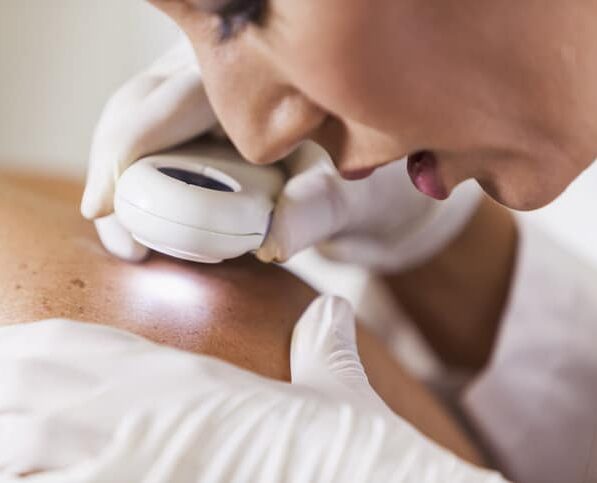
A skin cancer screening is a proactive way to identify concerning changes early, often before symptoms develop. During a screening, a dermatologist performs a full-body visual exam. Areas commonly exposed to the sun receive special attention. Photographic monitoring may be used to track changes over time.
Treatment Options for Skin Cancer Caused by Sun Damage
Sun damage skin cancer treatments depend on several factors. These include the type of cancer, how early it is detected, and where it appears on the body. Early diagnosis often allows for simpler, more targeted care, while more advanced cases may require a broader treatment approach guided by a dermatologist.
Mohs Surgery for Sun-Related Skin Cancer
Mohs surgery is commonly used to treat certain basal cell and squamous cell carcinomas caused by sun exposure. It is often recommended for cancers on the face, ears, scalp, or other highly visible areas where preserving healthy skin is important. This technique removes cancerous tissue layer by layer while sparing as much surrounding skin as possible. It is valued for its precision and high cure rates when used in appropriate cases.
Surgical Excision and Lesion Removal
Standard surgical excision is another common treatment for sun-related skin cancers and suspicious moles. The lesion is removed along with a margin of healthy tissue to ensure all abnormal cells are cleared. This approach is often effective for cancers detected early and can be performed in an outpatient setting. Pathology analysis confirms whether the cancer has been fully removed and helps guide any next steps.
Topical and Non-Surgical Treatment Approaches
Some early or superficial skin cancers may be treated without traditional surgery. Options can include topical medications that target abnormal cells or localized treatments such as cryotherapy or laser-based techniques. These approaches are typically reserved for specific cases and require careful follow-up. Your dermatologist will determine whether a non-surgical option is appropriate based on the lesion’s depth and behavior.
Advanced Treatment for More Aggressive Skin Cancers
In cases where skin cancer is more aggressive or has spread deeper, additional therapies may be needed. These can include radiation therapy or other specialized medical treatments coordinated by a care team. While these situations are less common, they highlight why early evaluation matters. Prompt diagnosis expands treatment options and improves long-term outcomes.
Prevention That Actually Helps
Prevention focuses on limiting future damage and monitoring existing changes rather than reversing past exposure.
Sun Protection Basics
Daily use of broad-spectrum sunscreen, protective clothing, and shade reduces cumulative UV exposure. These habits help protect both treated and untreated skin.

Why Regular Skin Checks Matter
Family history, genetics, and immune health can increase risk. Regular dermatology visits help track changes over time and catch concerns early, when treatment is most effective.
When to Book an Appointment
If you notice a changing spot, a persistent lesion, or something that feels different from the rest of your skin, a professional evaluation can provide clarity. For those in Chicago, dermatology teams like Pinski Dermatology and Cosmetic Surgery and Dermatology + Aesthetics offer comprehensive skin cancer screenings. If you are elsewhere, seeing a board-certified dermatologist near your home ensures consistent, personalized care.
FAQs About Sun Damaged Skin Cancer
Can sun-damaged skin turn into cancer?
Yes. Long-term sun damage can cause changes inside skin cells that may lead to cancer over time, especially when UV exposure repeatedly damages DNA and weakens the skin’s ability to repair itself, making early evaluation and monitoring important.
How does sun exposure create free radicals?
Sun exposure triggers free radicals when UV rays interact with skin cells, creating unstable molecules that damage healthy tissue. Over time, this oxidative stress disrupts normal cell function and increases the risk of premature aging and abnormal cell behavior.
What is a basal cell carcinoma skin cancer?
Basal cell carcinoma is the most common type of skin cancer and typically develops after years of sun exposure, often appearing as a small, pearly bump or persistent sore. It grows slowly but still requires treatment to prevent deeper tissue damage.
How fast does squamous cell carcinoma spread?
Squamous cell carcinoma usually grows faster than basal cell carcinoma and has a higher chance of spreading if left untreated. While many cases remain localized, delayed care can allow it to reach deeper skin layers or nearby structures.
What types of skin cancer are there?
The three main types of skin cancer are basal cell carcinoma, squamous cell carcinoma, and melanoma, each with different behaviors and risk levels. Early identification helps guide treatment and significantly improves outcomes, especially for more aggressive forms.
