
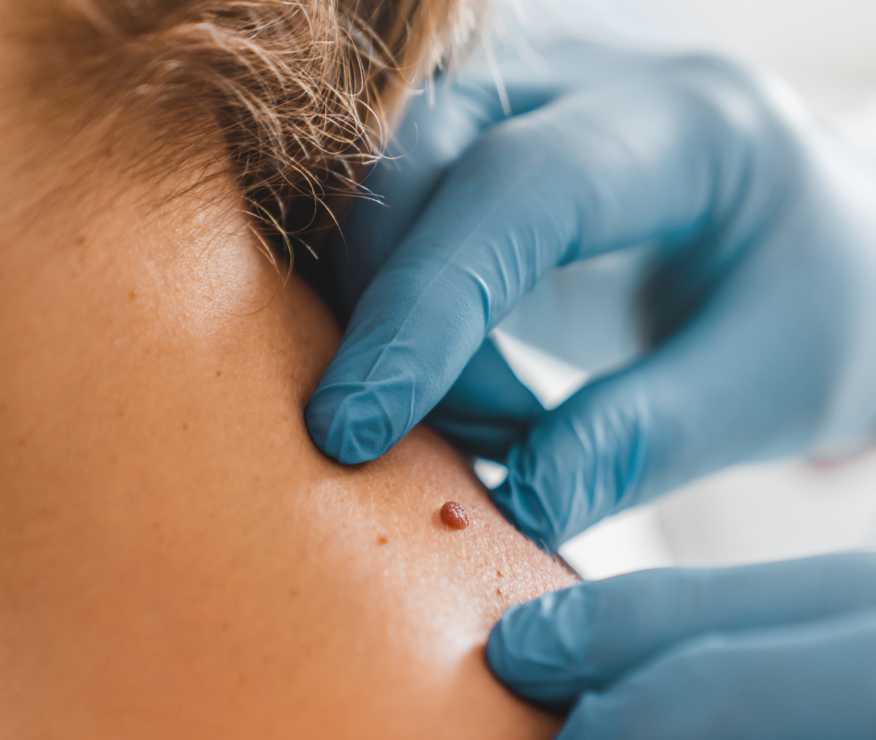
Many skin issues are easily noticeable, like acne, psoriasis, and hives. However, other issues may not be as easily identifiable, such as moles, sunspots, and other blemishes that can go unnoticed. Growths and marks like this can be signs of more serious issues, so a full-body skin exam is a great way to identify and evaluate if problems exist. A full-body skin exam is a visual check for unusual marks that could signal skin cancer or other health issues.
Birthmarks, moles, and other suspicious spots with an unusual color, size, shape, or texture are typically what dermatologists and providers are searching for. If suspicious areas are found, patients usually undergo a biopsy, treatment, and finally a follow-up. If an issue is found, the right treatment will be recommended after the biopsy. Finding and treating the issue early will greatly help in preventing more serious health issues and complications later on.
If you’ve never had a full-body skin exam, expect it to take around 15 to 20 minutes. Your doctor will ask you to remove your clothing and wear an exam gown for the head-to-toe exam. They will check your scalp, ears, toes, fingers, buttocks, and genitals for any suspicious growths or spots, and use special equipment with a light to see the marks clearly. You may be asked to remove nail polish, make-up, or anything that may be covering your skin and nails.
Everyone should get full skin screenings regularly from their doctors, but some patients are at higher risk for problems. If you have any of the following, you should especially receive regular, full skin checks:
During a full-body skin exam, a dermatologist examines the skin from head to toe to identify suspicious moles, unusual lesions, skin cancer warning signs, or other changes that may require monitoring or further evaluation. The exam may also include a review of personal risk factors, skin cancer history, and any specific concerns the patient has noticed.
Patients are typically asked to change into a gown so the dermatologist can evaluate as much skin as possible. Underwear may usually be worn during the exam, although recommendations can vary depending on the location of a skin concern or lesion that needs evaluation.
The recommended frequency depends on individual risk factors such as personal or family history of skin cancer, number of moles, skin type, and previous sun exposure. Many patients benefit from routine skin exams, while others may require more frequent monitoring based on their dermatologist’s recommendations.
If a suspicious mole or lesion is identified, your dermatologist may recommend monitoring it over time, performing a biopsy, or discussing additional testing or treatment options depending on its appearance and risk factors.
Regular skin cancer screenings may be especially important for individuals with a history of skin cancer, numerous or atypical moles, significant sun exposure, fair skin, or a family history of melanoma. A dermatologist can help determine an appropriate screening schedule.
Full-body skin exams are designed to identify suspicious changes in the skin that may indicate skin cancer or precancerous lesions. Early detection can help patients access evaluation and treatment before a condition becomes more advanced.
